Hardcover vs Paperback: How Book Printing Services Help You Decide
You’ve finished your manuscript, edited every page, and finally reached what feels like the end of the journey.
But not quite.
Because writing the book is only half the story.
Once the manuscript is complete, the next big decision begins. And one of the most important choices you’ll face is whether to go for hardback book printing UK or opt for a paperback edition. It may seem like a simple formatting decision, but it plays a major role in how readers perceive, value, and connect with your book.
Many authors overlook these finer details, but in reality, they significantly influence market response and reader engagement. This is where working with professional printing services becomes invaluable, as they understand industry trends, reader expectations, and what truly sells in the market.
What are Hardcover and Paperback Books?
It is important to know the distinction between these two formats before talking about strategy.
- Hardcover Books
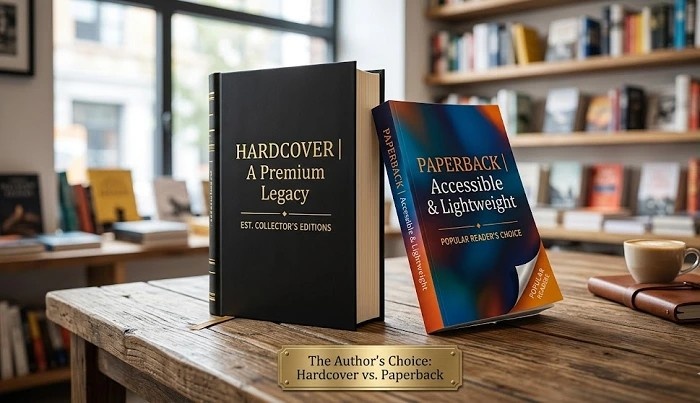
hardbacks are the books that are wrapped in thick board material with printed paper, cloth or other finishing materials and have a rigid, protective cover. They are made to withstand the demands of repeated use and may also have additional production features such as dust jackets, foil stamping, or special finishes.
For example, one of the most popular is a collector’s edition fantasy book. It can be read for the story, but it is also worth keeping for years because of the sense of worth the physical book provides. This is one of the reasons many authors go for the hardback book printing UK service when producing their high-quality publications.
- Paperback Books
Next, we have paperback books that come in flexible cardstock covers with lighter construction. They tend to be easier to transport, less costly to make and easier for readers to afford.
For example, a modern romance novel is sold via online retailers. Accessibility and cost are sometimes more important to readers than high-quality presentation. This is why the paperback book printing UK is especially favoured by independent authors and commercial fiction publishers.
How Do Book Printing Services Determine the Best Format?
Professional printers are not going to suggest something based on their own tastes. Rather, they consider a number of practical considerations.
- Audiences come first. A children’s keepsake book and a fast-paced thriller are an odd couple.
The first question that print specialists ask is how the reader will interact with the book. Are they going to keep it for future reference, or are they mainly going to read it for fun?
Once you know how it is used, it is usually easy to make the choice.
- Genre is more important than many authors think. Some types of genres are more suited to certain forms.
Photography books, art collections, and quality non-fiction works are just some of the types of books that are often best suited for hardback book printing UK, since presentation is a significant part of the reader experience.
Meanwhile, commercial fiction does well in the case of paperback book printing UK as low cost gets more sales.
- The consideration of cost is not to be overlooked. Productivity expenses impact on each and every publishing choice.
Self-publishing a book UK authors tend to have a budget. Printing providers play a critical role in the decision and can help establish if the anticipated retail price will be sufficient to cover the cost of hardcover printing or if a paperback retail price can yield an improved return on investment and profit.
- Distribution Expectations Matter. Also, book printing services conduct market analysis of where the book will be sold.
If a book is appearing in an independent bookstore, it may be worth the extra expense to have it in hardcover, but if it is available only online, the paperback may be the better option due to lower production costs.
What is the Reason of Prinitng both Formats for Their Books?
The experienced publishing experts are now saying that one should not think of hardcover and paperback book printing UK as going head-to-head with each other. They are two distinct media and not the rivals that many assumed.
A hardcover edition can be used to appeal to premium buyers, library users, and collectors. For readers who can be won with a paperback option, the book can appeal to the affordable market.
This approach gives authors a dual format to reach several audience groups without imposing one on any group. In many instances, book printing services use both hardback book printing UK and paperback book printing UK solutions in the very same publishing program.
It is not a matter of selecting one format for good, but which format should dominate the publishing strategy.
FAQs
Which is better for first-time writers: paperback or hardcover?
The paperback editions have cheaper production costs and selling prices, and the majority of first-time authors start with them. However, hardcover production could be advantageous for publications aimed at professional or collector markets.
Are books in hardcover more profitable?
Not all the time. Hardcover books are more expensive to create, even if they might fetch greater prices. Pricing strategy, sales volume, and distribution costs all affect profitability.
Which format is more durable?
The stiff covers offer superior defence against handling and wear, and that is why hardcover books usually survive longer.
are often preferred by regular readers due to their lower cost and lighter weight.
Conclusion
The debate about hardbacks and paperbacks needs to be diluted in the fast-forward era of the modern world. People, and most especially authors, need to understand that the final decision cannot be just made based on aesthetics. It requires a framed alignment with production decisions and audience expectations. Authors need to focus on financial realities and long-term publishing goals when looking for the cover design. A professional service provider here guides and navigates an author’s journey towards the medium that best complements the genre they present to readers. When an audience comes across a kind of book that meets their expectations, they actually love and recommend it to their fellow reader community as well.

I am a professional content writer and contributor for SelfPublishingBook.co.uk, with extensive experience in writing, editing, and publishing. Over the years, I have worked with a variety of authors, helping them understand the process of bringing a book from concept to publication. Many self-publishers have been guided by me, and I explain the self-publishing concept clearly. I focus on providing practical advice, insights on publishing trends, and tips on marketing strategies that help authors reach the right audience. My work has appeared in articles, blogs, and guides aimed at supporting writers at every stage of their journey. I combine creative storytelling with professional publishing knowledge to make the path to publishing clear, approachable, and effective.